
Multilingual Video Content Strategy for Indian Audiences
Published by FrameBuzz Media
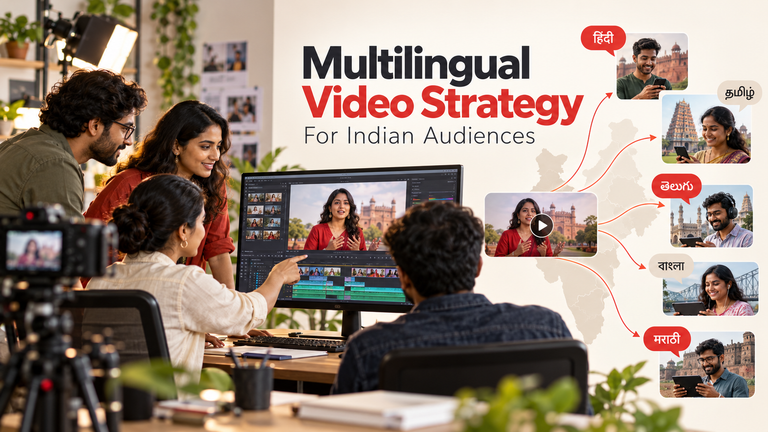
A single national campaign rarely speaks to every Indian audience in the same way. Language influences trust, comprehension and emotional response. A thoughtful multilingual video content strategy helps brands, agencies and learning teams adapt one central idea for different regions without losing consistency.
The most efficient approach begins before the camera starts rolling. When language versions, subtitles, aspect ratios and regional adaptations are planned during pre-production, teams can avoid repeated shoots and expensive last-minute editing.
Why multilingual video deserves its own strategy
Adding translated subtitles to a finished video is useful, but it is not always enough. Some audiences prefer dubbed content, some need captions for accessibility and others respond better to regionally familiar expressions, voices and examples.
A strategy defines which markets matter, how each audience consumes content and which level of adaptation is appropriate. This keeps creative decisions connected to business goals.
Choose priority languages using audience data
Do not localize into every language simply because it is possible. Review customer locations, sales data, campaign analytics, platform insights and support requests. Identify where language is preventing understanding or conversion.
You can then group languages into phases:
- Primary markets: full dubbing, subtitles and adapted graphics
- Growth markets: voice-over or subtitles with selected visual adaptation
- Test markets: shorter localized assets used to validate demand
Design the master video for adaptation
A localization-friendly master gives every language enough room to sound natural. Avoid extremely fast speech, text-heavy frames and graphics that are difficult to edit. Keep important text in editable layers and retain clean music-and-effects tracks whenever possible.
During filming, capture additional pauses, cutaways and neutral visual sequences. Editors can use these shots to manage language timing without creating awkward speed changes.
Select the right localization format
Dubbing
Dubbing creates an immersive experience and works well for entertainment, product storytelling, demonstrations and emotionally led campaigns.
Voice-over
Voice-over is efficient for corporate films, documentaries, interviews, training and explainer content. It can preserve part of the original voice while making the message accessible.
Subtitles and captions
Subtitles are useful for cost-efficient reach and sound-off viewing. Closed captions also include meaningful sound information and support accessibility.
Animation and graphic adaptation
Animated content is flexible, but text expansion must be considered. Translated words may require more space, different timing or redesigned layouts.
FrameBuzz Media can combine these formats through its video, audio, animation and localization capabilities.
Adapt the message without weakening the brand
Localization should feel regional while remaining recognizably part of the same brand. Create a language glossary for product names, claims, technical terms and words that must remain in English. Share pronunciation references and examples of the preferred tone.
The creative team should know which parts of the script are fixed and which can be adapted. This balance protects brand consistency while allowing dialogue to sound natural.
Build social formats into the production plan
A campaign may require a landscape master, vertical reels, square posts, six-second cutdowns and platform-specific captions. Each language multiplies these deliverables. Establish a clear version matrix before editing begins.
A practical matrix should include language, duration, aspect ratio, subtitle requirement, voice format, on-screen text and delivery platform. Consistent naming and folder structures make reviews faster and reduce the risk of incorrect versions being published.
Create one quality-control standard
Every language should follow the same approval process. Language reviewers need the final video—not only the script—so they can check timing, context, text and audio together.
Quality control should verify:
- Meaning and cultural suitability
- Pronunciation and voice consistency
- Audio synchronization and mixing
- Subtitle timing, line breaks and readability
- On-screen text and spelling
- Correct language, aspect ratio and file name
Measure performance by language and format
Track completion rate, engagement, click-through rate, leads and conversions separately for each language. A language with fewer total views may still produce stronger engagement or higher conversion.
Use this data to improve future scripts, casting, duration and format choices. Multilingual content becomes more efficient when every release informs the next one.
Turn one idea into many relevant experiences
FrameBuzz Media helps teams plan production and multilingual delivery as one connected process. Browse our request relevant project samples, read more FrameBuzz Media insights, or share your campaign brief to build a practical version plan.
Frequently asked questions
Should a brand use dubbing or subtitles?
It depends on the platform, audience, budget and content type. Many campaigns use both: dubbing for priority markets and subtitles for wider distribution.
When should localization planning begin?
Ideally, localization planning begins during scripting and pre-production. Early planning improves timing, graphics, costs and delivery consistency.
Can one shoot produce content for multiple languages?
Yes. With a localization-friendly script, editable graphics, clean audio stems and planned cutaways, one shoot can support several language and platform versions.
One Response