
How to Plan a Multilingual Video Campaign: A Step-by-Step Guide
Published by FrameBuzz Media
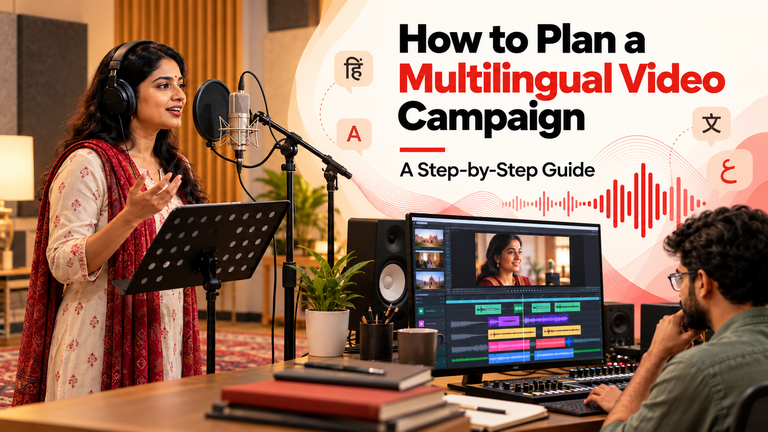
A multilingual video campaign helps one message reach audiences across regions without losing clarity, emotion or brand consistency. Success, however, depends on more than translating a finished script. Language selection, cultural adaptation, voice casting, on-screen text, subtitles, review responsibilities and platform specifications should be planned before production begins.
Step 1: Define the campaign objective
Begin with the action you want viewers to take. A product launch, training programme, awareness film and performance advertisement have different requirements. Document the target audience, platform, duration, tone and measurable outcome. These decisions guide the script, visual pacing and localization method.
Step 2: Select languages using audience data
Do not choose languages only by population size. Review where your customers, employees or learners are located and which languages they prefer when consuming video. A phased launch can be practical: start with the highest-priority markets, analyse performance and then expand into additional languages.
For Indian campaigns, common requirements include Hindi, Bengali, Tamil, Telugu, Marathi, Gujarati, Malayalam, Kannada, Punjabi and Odia. The right combination depends on the campaign rather than a standard list.
Step 3: Prepare a localization-ready master script
The source script should be clear, concise and free from unnecessary idioms. Identify brand names, product terms, numbers, disclaimers and words that must remain in English. Create a pronunciation guide for names and technical terminology. If the video is already edited, provide a time-coded script or subtitle file to support accurate timing.
Step 4: Choose dubbing, voice-over or subtitles
Each format serves a different purpose:
- Dubbing replaces the original dialogue and works well for films, character-led videos and immersive storytelling.
- Voice-over is efficient for explainers, corporate communication, training and documentary content.
- Subtitles preserve the original voice and support silent viewing, accessibility and cost-efficient expansion.
Campaigns often use a combination—for example, localized voice-over for the main video and subtitles for short social versions. FrameBuzz Media provides coordinated dubbing, voice and localization services within one workflow.
Step 5: Adapt the message, not just the words
Literal translation can sound unnatural or change the intended meaning. A localization team should adapt sentence structure, examples, humour, measurements and calls to action while preserving the brand message. Transcreation may be necessary for slogans and emotional advertising copy.
On-screen graphics also require attention. Translated text may become longer or shorter, affecting layouts and timing. Designers should receive approved translations before final exports are created.
Step 6: Cast voices for audience and brand fit
Voice selection should consider age range, tone, accent, energy and subject matter. Share short samples with stakeholders before full recording. If the campaign includes several languages, use one casting brief so the overall brand personality remains consistent even when individual voices differ.
Step 7: Build a controlled review process
Assign one qualified reviewer for each language and provide context with the files. Reviews should cover linguistic accuracy, pronunciation, timing, audio quality, subtitle readability and on-screen text. Consolidated feedback prevents conflicting instructions and repeated production cycles.
Step 8: Specify every final deliverable
Create a delivery matrix listing language, platform, aspect ratio, resolution, audio layout, subtitle format and filename. A campaign may need horizontal masters, vertical reels, square social edits, clean video, mixed audio and SRT files. Clear naming and version control become increasingly important as the number of languages grows.
Common multilingual campaign mistakes
- Starting translation only after the final deadline is close.
- Using machine translation without contextual human review.
- Ignoring text expansion in graphics and subtitles.
- Recording voices before terminology and pronunciation are approved.
- Collecting feedback from several people without consolidation.
- Delivering files without a defined naming structure.
Manage every language through one accountable workflow
A single production and localization partner can reduce handoffs between translators, artists, editors and reviewers. FrameBuzz Media brings video, audio, dubbing, subtitles, graphics and multilingual quality control together. Discuss your multilingual campaign and receive a practical workflow based on your languages, platforms and deadline.