
Dubbing and Localization Services in India: A Complete Guide
Published by FrameBuzz Media
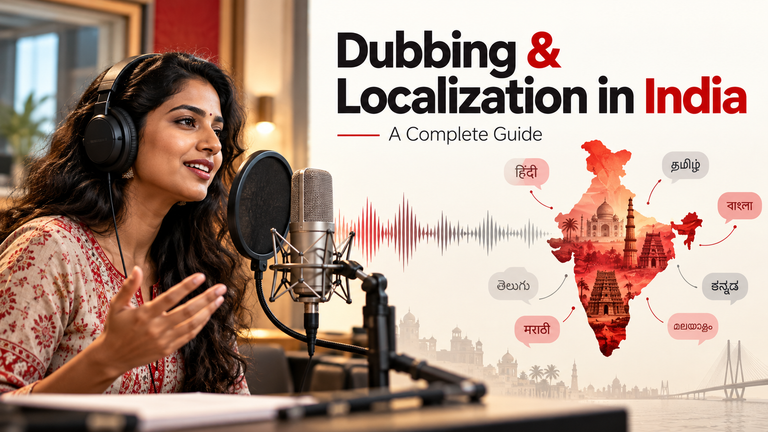
India’s audience is multilingual by default. A campaign, film, training programme or digital product may need to communicate across Hindi, Bengali, Tamil, Telugu, Marathi, Gujarati, Malayalam, Kannada and several other languages. Translation alone cannot create that experience. Professional dubbing and localization services in India adapt meaning, performance and context so content feels natural to each audience.
For brands, OTT platforms, agencies and learning companies, localization is no longer a final technical step. It is part of content strategy. When planned early, it expands reach, improves comprehension and helps one production work across multiple markets.
What is the difference between translation and localization?
Translation converts words from one language into another. Localization adapts the complete viewing experience. It considers culture, tone, idioms, timing, visuals, units, references and the expectations of the target audience.
For example, a literal translation may be grammatically correct but sound unnatural when spoken. A localized script keeps the original intention while using expressions and sentence lengths that work for the target language and performance.
What does a professional dubbing workflow include?
Content analysis and asset check
The team reviews the source video, script, subtitle files, reference audio, character information and technical specifications. Missing or mismatched assets are identified before production starts.
Translation and dialogue adaptation
The script is translated for meaning and then adapted for speech. Dialogue length, pauses, emotion, character personality and lip movement are considered. The goal is not word-for-word similarity; it is a believable performance that preserves the original message.
Voice casting
Voices should match the age, energy, personality and dramatic function of each character or speaker. For corporate and learning content, pronunciation, clarity and subject familiarity may be more important than dramatic range.
Recording and direction
A director guides pronunciation, pace, emotion and consistency. Good direction prevents a technically clean recording from feeling disconnected from the picture.
Editing, mixing and synchronization
Recorded dialogue is cleaned, edited and synchronized with the video. It is then balanced with music, effects and background ambience. Delivery specifications may vary between web, broadcast, OTT and learning platforms.
Language and technical quality control
Language QC checks meaning, pronunciation, grammar, names and consistency. Technical QC checks synchronization, noise, levels, missing dialogue, file naming and delivery format.
Explore FrameBuzz Media’s integrated audio, voice and multilingual content services to understand how these stages connect.
Where dubbing and localization create the most value
- OTT and entertainment: series, films, trailers, promos and audio description
- Corporate communication: internal films, leadership messages and compliance content
- E-learning: courses, assessments, demonstrations and software training
- Advertising: regional campaigns, product films and digital ads
- Social content: multilingual reels, explainers and creator-led videos
- Accessibility: subtitles, closed captions and audio description
Common localization mistakes to avoid
Using literal translations
Literal language often sounds formal or unnatural. Scripts should be written for the ear, not only for the page.
Selecting voices only by price
A mismatched voice can weaken the credibility of the entire video. Short casting samples help stakeholders approve tone before full recording.
Ignoring text visible on screen
Titles, supers, labels, graphics and demonstrations may also need translation. These elements should be listed during asset analysis.
Skipping final in-context review
Audio may sound correct in isolation but reveal timing or meaning issues when placed against the final picture. Always review the complete localized master.
Human voices, AI voices or a hybrid workflow?
Human voices remain valuable for emotionally sensitive, character-led and premium brand content. AI voices can support high-volume, frequently updated or cost-sensitive projects when consent, quality and usage rights are properly managed.
A hybrid workflow can combine automation with human adaptation, pronunciation review and QC. The correct choice depends on audience expectations, content type, budget, turnaround and legal permissions—not only on speed.
How to prepare a multilingual project brief
Share the source video, clean script, target languages, pronunciation references, character notes, technical specifications, desired turnaround and final delivery formats. Also identify whether subtitles, captions, audio description or on-screen text localization are required.
Providing these details early allows the production partner to plan teams, timelines and costs accurately.
One workflow for every language
FrameBuzz Media brings video, audio, dubbing, localization and post-production together under one managed workflow. View our request relevant project samples, learn how our team works, or discuss your languages and delivery requirements.
Frequently asked questions
Which Indian languages can be localized?
Projects can be planned for major Indian languages and selected regional languages depending on content type, artist availability and delivery requirements.
Can you provide subtitles along with dubbed audio?
Yes. Dubbing, subtitles, closed captions and on-screen text adaptation can be managed within one localization workflow.
What affects dubbing turnaround time?
Duration, number of characters, language count, casting, script readiness, technical specifications and review cycles all affect the schedule.
One Response